Melbourne treatment guide
HIFU
Price, Pain Level & Face Lifting Results Guide
Considering HIFU in Melbourne? Honest guide to price, pain level, lifting results, and how it compares to Ultherapy and Thermage.
Last updated: 2026-10-24
Effect Breakdown
Score / 5The Short Version
HIFU (high-intensity focused ultrasound) is a category of devices, not a single standardised treatment. The Melbourne clinic menus checked below use different machines and treatment-area names, so two HIFU quotes may involve different cartridges, shot counts and protocols. Published examples include HIFU Face at $520 and Ultraformer III Full Face at $1,000; those names do not establish an equivalent treatment. Evidence supports modest tightening for selected mild-to-moderate laxity; it does not support treating every device or package as equivalent.
What HIFU Actually Does
HIFU stands for High-Intensity Focused Ultrasound. The treatment delivers focused ultrasound energy to precise depths beneath the skin — typically 1.5mm, 3mm, and 4.5mm — generating heat at those target points to stimulate collagen remodelling.
Think of a magnifying glass focusing sunlight into a single hot point. The glass itself stays cool, the table it rests on is fine, but the focal point gets intense heat. HIFU works the same way: ultrasound passes through the skin's surface without damaging it, then converges at the target depth to create controlled thermal injury that triggers new collagen production.
On the market you'll find brands such as Ultraformer, Doublo and UTIMS, among others. Sharing a focused-ultrasound mechanism does not establish equivalent energy delivery, imaging, evidence, indications or operator training. Ultherapy is a particular proprietary system with real-time imaging; “HIFU” on a clinic menu may refer to many different configurations.
One thing to set expectations on upfront: HIFU results don't appear overnight. New collagen takes time to form. Most people see noticeable lifting around 2–3 months post-treatment, with the full result appearing around 6 months.
HIFU Melbourne Price: Published Clinic Examples
These are specific menu items checked on 24 October 2026, not a Melbourne-wide average or a quote for your treatment:
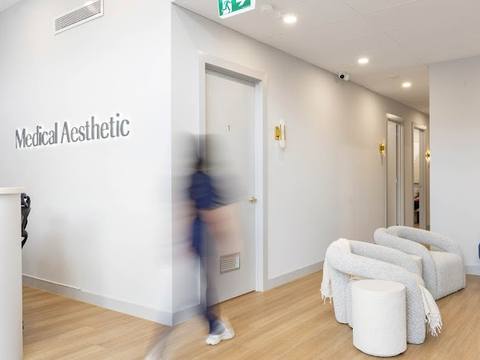
- Medical Aesthetic, South Melbourne: Ultraformer III. Its own price menu lists Half Face $630, Full Face $1,000, and Full Face & Double Chin $1,630. Double chin is the stated inclusion; it should not be renamed “full neck”.
- Dermal Distinction, Balwyn North: HIFU Face. Its own treatment menu lists $520. The HIFU service page does not identify a manufacturer/model, so the menu does not establish that this is Ultraformer or Ultherapy.
- Melbourne Clinical Laser, South Yarra: Ultherapy PRIME. Its PRIME page explicitly names the system and South Yarra location. No numerical treatment fee was found on that page when checked; a lower-priced generic HIFU menu is not a substitute Ultherapy quote.
A useful written quote names the manufacturer and model, exact areas, line/shot count, number of appointments, operator, consultation fee and included aftercare. Compare those details before comparing the total. A missing price on a page means it was not found there, not that treatment is free or unavailable.
For the local lists, compare HIFU and Ultherapy in South Yarra, compare Melbourne HIFU listings, or read the Ultherapy-specific guide. The examples above are source checks, not a recommendation of one clinic or device over another.
What HIFU Feels Like
Honestly, HIFU is not the most comfortable treatment. It's more intense than most laser procedures, and it's worth knowing that going in.
The sensation is best described as quick, hot pokes into the skin. The jawline and cheekbones tend to be the most uncomfortable areas; the forehead and cheeks are generally more manageable. Most people find it very tolerable, but those with lower pain thresholds will notice it.
- Most clinics apply numbing cream for 20–30 minutes before the session
- Full-face treatment runs about 30–60 minutes depending on shot count
- Immediately after: a warming sensation that settles within 1–2 hours
- Painkillers aren't typically needed, though you can ask about pre-treatment options if you're concerned
Pain experience also varies by device. Different HIFU machines have different handpieces and pulse characteristics, so it's worth asking your practitioner what to expect from the specific device they use.
HIFU Recovery and Aftercare
One of HIFU's most practical advantages is the recovery time, or lack of it.
Day 1 (treatment day):
- Mild redness and warmth in the treated area
- Some puffiness, similar to waking up puffy from a deep sleep
- You can go back to work the same day; keep makeup light
Days 2–7:
- Mild swelling and redness settle gradually
- Occasional mild bruising around the jawline — not common, but possible, and it usually clears within a week
- The treated area may feel slightly tender to touch; this is normal
What to avoid for one week:
- Saunas, hot tubs, and hot yoga (sustained heat in the treatment area can increase swelling)
- Vigorous exercise (elevated body temperature has a similar effect)
- Exfoliants and acids
- SPF50+ daily, even though HIFU isn't a light-based treatment; the skin is mildly sensitised post-session
Pre-treatment prep:
- Disclose your full medication history and medical conditions during consultation
- Avoid active breakouts or open wounds in the treatment area
- Remove metal jewellery near the treatment zone before your appointment
When to call your clinic: If you experience blistering, persistent severe pain beyond 48 hours, or unusual nerve sensations, contact your AHPRA-registered practitioner immediately. These are uncommon, but they warrant prompt assessment, not a wait-and-see approach.
Is HIFU Right for You?
Good candidates:
- People aged roughly 28–50 who are noticing early to moderate skin laxity
- Anyone with a softening jawline, emerging jowls, or the start of a double chin
- Those who want a non-invasive approach before considering surgery or injectables
- People who want lifting but find Ultherapy pricing out of reach
Contraindications:
- Pregnancy or breastfeeding
- Metal implants in or near the treatment area (surgical plates, screws, etc.)
- Pacemakers
- Open wounds or active infections in the treatment area
- Severe active acne in the treatment area
- Autoimmune conditions affecting the skin (such as lupus)
- Severe skin laxity beyond what non-surgical treatment can meaningfully address
A note on expectations: HIFU works best for early to moderate laxity. If skin is already heavily sagging, the result will be limited and a surgical consultation may be a more honest conversation to have. A good practitioner will tell you this directly rather than overselling.
Everyone should consult an AHPRA-registered practitioner before booking. Share your complete medication history, medical background, and skin concerns so the assessment is accurate.
How Many Sessions and How Long Results Last
Sessions: typically 1–2, spaced 12–24 weeks apart.
- Mild laxity or preventive maintenance: 1 session is often sufficient
- Moderate laxity: 2 sessions spaced 3–6 months apart tends to produce better outcomes
When results appear: generally, early changes around 1 month, noticeable lifting at 2–3 months, peak result around 6 months.
How long results last: studies use different devices and follow-up periods, and longer-term evidence is limited. A systematic review found that patient-reported improvement was usually mild and that long-term follow-up was unavailable. Reassess the result before accepting a routine 12- or 18-month maintenance schedule.
HIFU vs Ultherapy, Thermage, and PDO Threads
-
HIFU vs Ultherapy: Both use focused ultrasound, but Ultherapy is a defined system with real-time imaging and specific cleared indications; generic HIFU covers many devices. There is not enough head-to-head evidence to convert the price gap into a reliable prediction of the result gap. Read the related guide →
-
HIFU vs Thermage: Different mechanisms entirely. Thermage uses radiofrequency energy to heat collagen, while HIFU uses focused ultrasound. Thermage tends to do more for skin texture and surface tightening; HIFU targets deeper tissue and the SMAS layer for structural lifting. Some people combine both treatments at different intervals for complementary effects. Read the related guide →
-
HIFU vs PDO Thread Lifting: Threads give you visible lifting almost immediately because physical sutures are placed in the tissue. HIFU builds gradually over months. If you need results for an event or want instant visible change, threads are more direct. If you prefer a gradual, natural-looking improvement with no physical intervention, HIFU suits better. Read the related guide →
Not sure which fits your situation? A practitioner can assess your skin laxity grade and give you an honest recommendation during consultation.
What the Evidence Can and Cannot Tell You
A 2023 systematic review found 16 eligible studies from 693 records. Reported objective changes included small brow lifts and reductions in photographed submental area, while pooled patient-reported improvement was mild. The review found varied devices, settings, protocols and energies, and no longer-term follow-up. It also reported uncommon adverse events including altered sensation, bruising, burns, striations and contact dermatitis.
That evidence supports careful use for selected mild-to-moderate laxity; it does not validate every HIFU machine or a clinic's claimed shot count. Ask for the manufacturer and model, the ARTG inclusion relevant to the supplied device, cartridge depths, treatment map, operator training and the clinic's escalation plan for burns or nerve symptoms.
How to Choose a HIFU Clinic in Melbourne
A framework for evaluating clinics (not clinic recommendations):
- Ask which device they use and check the ARTG. The TGA advises against implying that it “approves” or endorses a product. Ask for the device's ARTG number and verify what that entry actually covers.
- Identify the operator and clinical responsibility. If the operator claims to be a registered health practitioner, verify them on the Ahpra register. Also ask about device-specific training and who manages an adverse event.
- Assess the consultation quality. Does the practitioner examine your skin, grade your laxity honestly, and set realistic expectations? Be cautious of anyone who overpromises.
- Ask about shot count transparency. How many shots is the proposed treatment? Is the neck included? Are there add-ons that weren't mentioned upfront?
- Check their aftercare and follow-up process. What happens if you have a reaction? Who do you contact?
Consult 3–5 clinics before committing. Don't let a "limited-time offer" rush the decision.
Frequently Asked Questions
What is the difference between HIFU and Ultherapy?
HIFU and Ultherapy both use focused ultrasound to stimulate collagen. The key practical difference is that Ultherapy includes real-time imaging guidance, allowing the practitioner to visualise tissue depth and confirm correct placement before each pulse. HIFU devices work from preset parameters without that visual layer. Ultherapy also has more published clinical studies and FDA clearance specifically for brow and submental lifting. Whether it's worth the price difference depends on your budget and how much weight you place on imaging-assisted accuracy.
Can I go straight back to work after HIFU?
Yes, for most people. Mild redness and puffiness are common on the day, so keep makeup light and avoid anything heavy or occlusive. If you have a high-visibility event on the same day, you might prefer to reschedule. For anything important like a wedding or major presentation, plan the treatment at least one week before to give the skin time to settle.
When will I actually see results?
Patience is the key with HIFU. You might notice some skin firmness around 4 weeks. More noticeable lifting typically appears at 2–3 months, with the full result around 6 months. This timeline can feel frustrating if you're used to injectable results, but it's simply how collagen remodelling works. If you feel nothing has changed at 2 weeks, that's expected, not a sign the treatment didn't work.
Can I combine HIFU with other treatments?
Yes, with timing. Common pairings include skin boosters (hydration support while collagen rebuilds, wait at least 2–4 weeks post-HIFU) and radiofrequency treatments for texture improvement (at separate sessions, not the same day). Daily use of a retinol or vitamin A serum in the months following HIFU can also support collagen synthesis. Specific combinations and intervals should be discussed with your practitioner, as the right approach varies by individual.
My skin is quite saggy. Will HIFU work for me?
HIFU is most effective for early to moderate laxity. If the skin is significantly sagging, the treatment can still provide some tightening, but the lift may not be dramatic enough to meet expectations. In those cases, a practitioner might suggest surgical options or a combined approach as a more honest solution. Ask for a direct assessment during consultation; a good practitioner will tell you where HIFU is the right fit and where it isn't.
Sources and Review Basis
- PubMed: systematic review of microfocused ultrasound for facial tightening
- PubMed: meta-analysis of microfocused ultrasound for facial rejuvenation
- FDA 510(k) summary for the Ulthera System and its imaging function
- TGA: Australian Register of Therapeutic Goods
- TGA: do not imply government endorsement or “TGA approved” status
Clinical evidence and device specifications reviewed 2 October 2026. The Melbourne clinic-menu examples were rechecked 24 October 2026; published fees can change and are not personal quotes.
See which clinics in Melbourne offer this treatment
See clinics offering HIFU→Clinics in Melbourne offering HIFU
View all clinics →


Related Guides
Ultherapy Melbourne
Considering Ultherapy in Melbourne? Honest guide to price, pain level, lifting results, and how it compares to Thermage and HIFU.
Thermage Melbourne
Considering Thermage in Melbourne? Honest guide to price, pain level, skin tightening results, and how it compares to Ultherapy and HIFU.
PDO Thread Lift Melbourne
Considering a PDO thread lift in Melbourne? Honest guide to price, pain level, recovery, and how it compares to Ultherapy and Thermage.